What History Tells Us: Home Prices & Mortgage Rates During a Recession
What Really Happens to Home Prices During a Recession?
Every time the word “recession” starts popping up in headlines, it brings a wave of uncertainty—especially for anyone thinking about buying or selling a home.
You might be wondering:
Are home prices going to crash?
Will mortgage rates skyrocket?
Should I wait to make a move?
Totally fair questions—and you’re not alone in asking them. The good news is we can look to history to get some real answers.
A Recession Doesn’t Automatically Mean Home Prices Will Drop
First, let’s clear up a common myth: a recession is not the same as a housing crash.
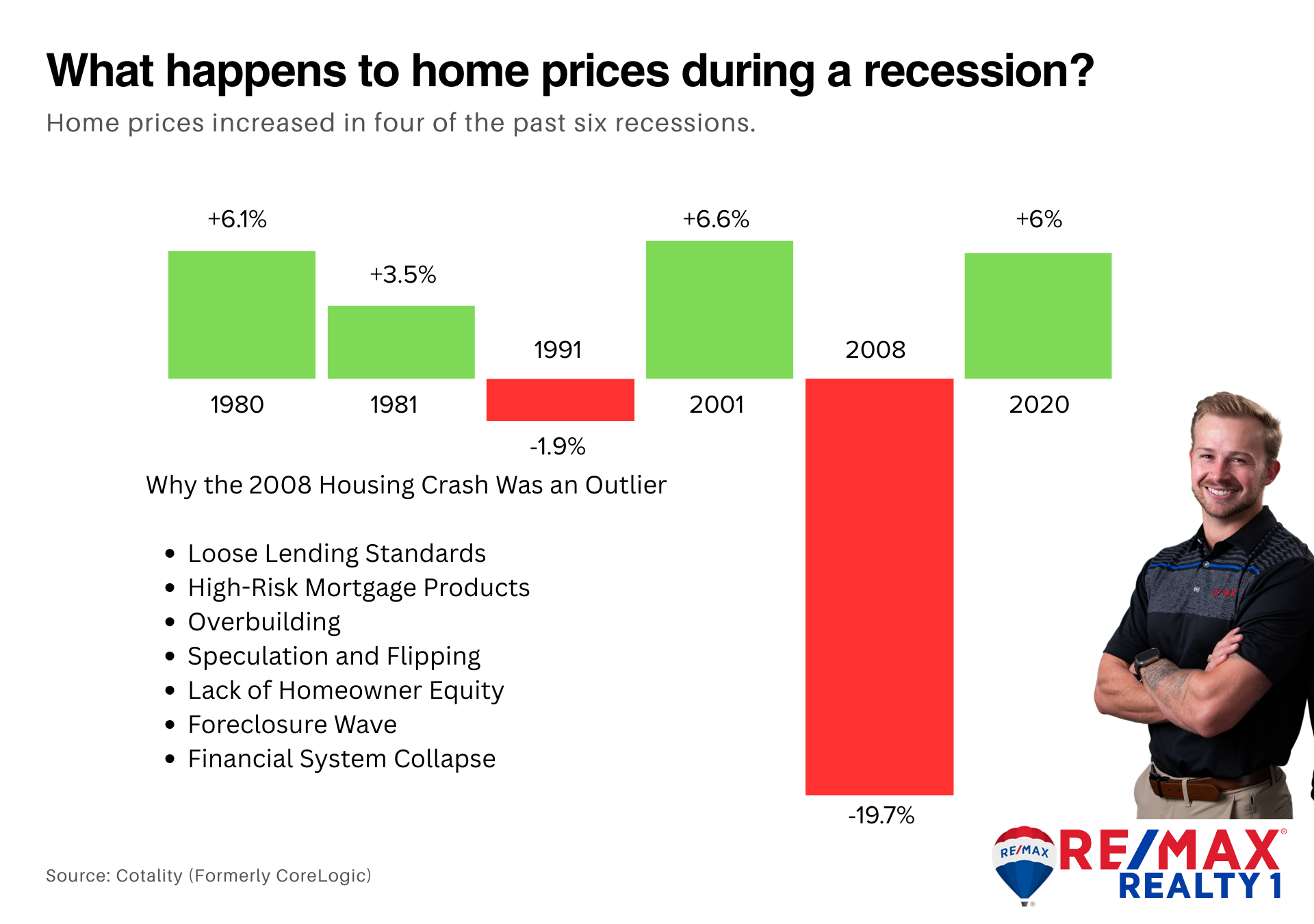
Data shows that in 4 of the last 6 U.S. recessions, home prices actually went up, and in one, home prices dropped less than 2%. The exception was 2008—and that was a very specific situation involving risky loans, overbuilding, and a financial system that was already on the brink.
So, what usually happens?
Home prices tend to stay on track or slow down gradually.
Fewer buyers may jump into the market, but that doesn’t always mean prices will plummet.
Every local market reacts differently, depending on how many homes are available and how many buyers are looking.
Mortgage Rates Tend to Go Down During a Recession
Here’s something most buyers love to hear: mortgage rates usually drop during a recession.
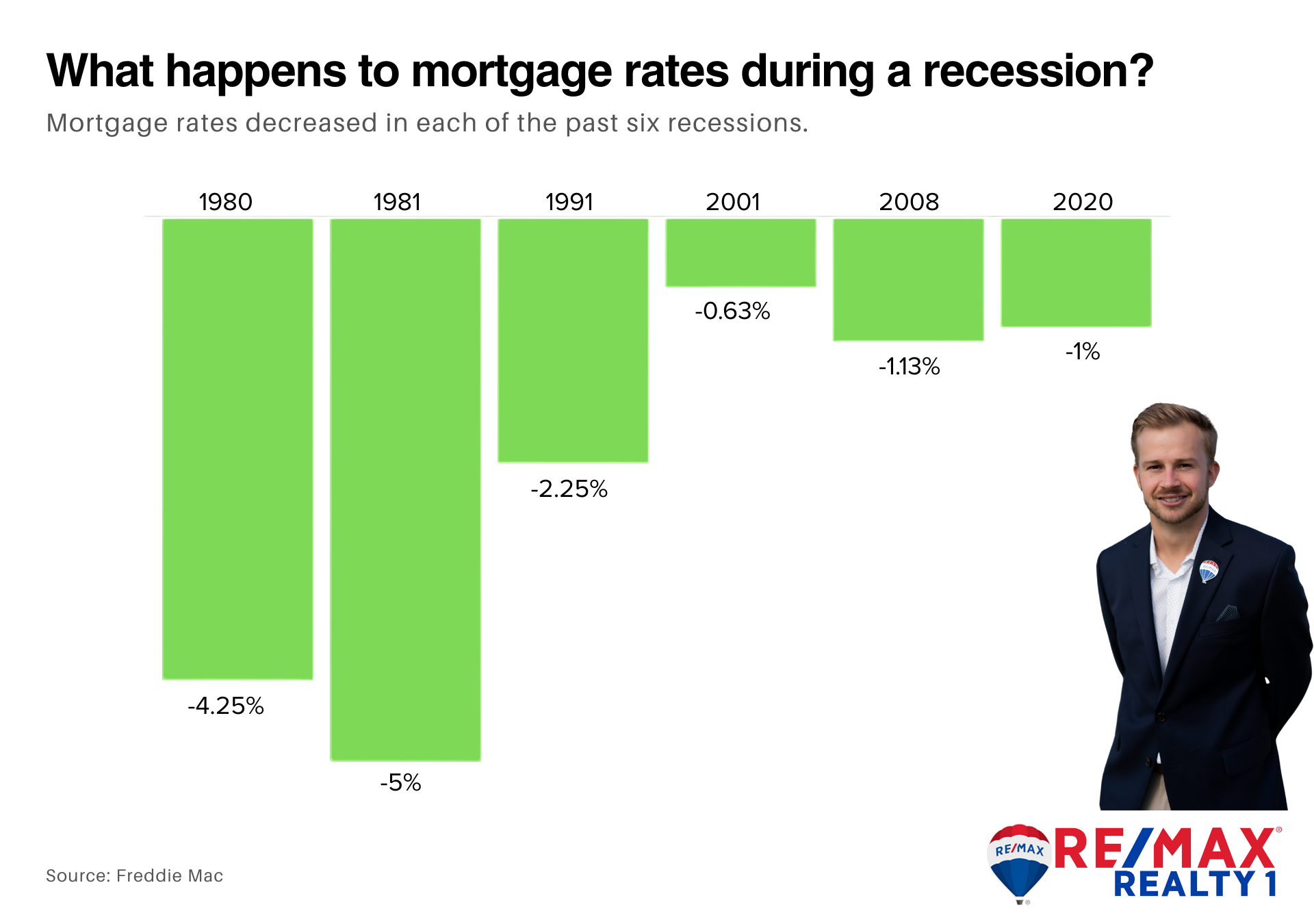
Freddie Mac data shows rates declined in all six of the last U.S. recessions. That’s because the Federal Reserve often lowers interest rates to help the economy, and that can make borrowing cheaper.
Now, we’re probably not heading back to the super-low 3% rates we saw in 2020, but even a slight dip in rates can make a big difference in your monthly payment.
Today’s Homeowners Have Strong Equity Positions
One of the biggest differences between now and the 2008 housing crisis is homeowner equity. Years of solid price appreciation have created substantial equity cushions for most property owners.
Realtor.com’s analysis of Federal Reserve data Shows:
Even if home prices dropped 10%, homeowner equity would still be at 69.5% of total value (similar to 2021).
A 20% drop would bring equity levels back to what we saw in 2019.
More than half of homeowners (54%) have mortgage rates below 4%, which means they’re not likely to be forced into selling.
This strong equity position means we’re unlikely to see waves of distressed sales flooding the market, which helps maintain price stability even during challenging economic times.
Final Thoughts
Economic downturns often bring up uncertainty and fear. But historical data shows that home prices tend to hold steady (or increase) and mortgage rates usually go down. And today, homeowners are in an incredibly strong position.
If you’re wondering how this might impact your own plans to buy or sell, let’s chat. I’m here to help you make the best decision for your future—not the headlines.